
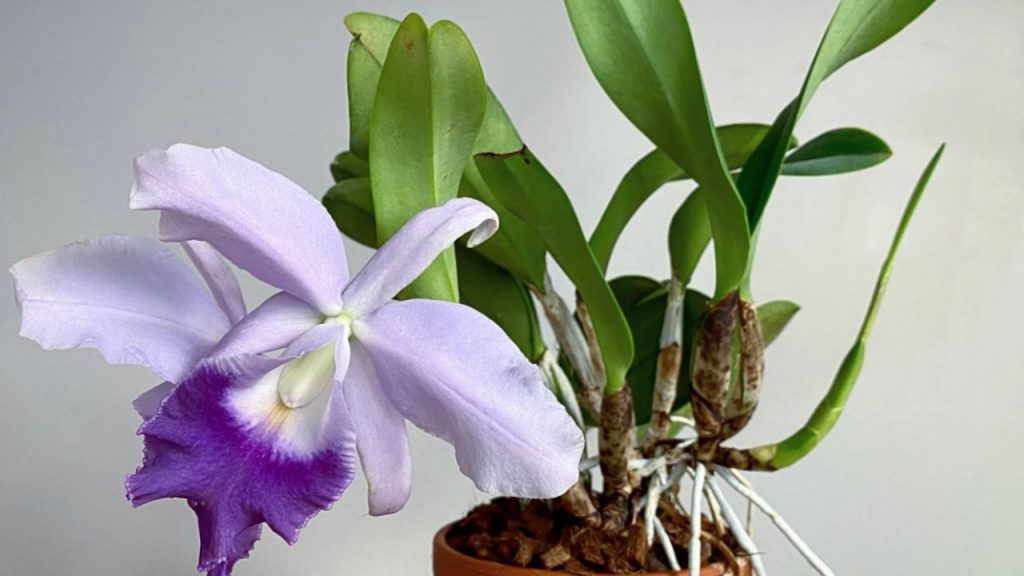
If you love orchids, you will love Cattleya orchids. Big blooms. Bright colors. Strong fragrance.
They look expensive and delicate. But they are not hard to grow.
In other words, Cattleya orchid care is not complicated. It just needs the right basics.
What follows is a simple, friendly guide for orchid lovers.
First, Understand Your Cattleya
Cattleyas are epiphytic orchids. That means they grow on trees, not in soil. Their roots need air and not constant moisture
So the roots must:
- Breathe
- Dry between watering
- Stay well ventilated
If the roots are healthy, the plant is healthy. If the roots rot, the plant suffers.
Cattleya Orchid Care Checklist
1. Light (This Controls Blooming)
Light is the #1 factor for flowers. No light = no blooms.
Best light:
- Bright, indirect light
- East window = perfect
- South window = filtered light
- Grow lights = 10–12 hours daily
Leaf color guide:
| Leaf Color | Meaning |
| Dark green | Too little light |
| Yellow-green | Too much light |
| Light green | Perfect light |
Is your plant healthy but not blooming? It usually needs more light, not more fertilizer.
2. Watering (Roots Must Dry)
Cattleyas hate wet feet.
Rule:
Water only when the roots are dry.
How to check:
- Finger test in the pot
- Dry = water
- Damp = wait
General guide:
- Summer → every 4–7 days
- Winter → every 7–10 days
Always let water drain fully. Never let the pot sit in water.
3. Airflow (Prevents Disease)
Airflow keeps roots and leaves healthy. It prevents:
- Fungus
- Bacteria
- Mold
- Rot
Simple airflow:
- Open windows
- Small fan
- Good room ventilation
Still air = problems. Moving air = health.
4. Temperature
Cattleyas love normal home temperatures.
Ideal:
- Day: 70–85°F (21–29°C)
- Night: 60–65°F (15–18°C)
That night drop helps trigger blooming.
5. Humidity
Cattelya likes moisture in the air, not in the pot.Humidity supports leaf health and root growth.
Best humidity:
50%–70%
Easy ways:
- Pebble trays
- Humidifier
- Group plants
- Light misting
6. Feeding (Simple and Safe)
Cattleyas do not need heavy feeding.
Easy rule:
Weak fertilizer. Once a week.
- Use diluted orchid fertilizer
- Feed during growth season
- Pause in winter
Flush with plain water once a month. This prevents salt buildup.
7. Potting & Repotting
When to repot:
- Media breaks down
- Roots outgrow pot
- Water stays too long
- New growth starts
Usually every 2–3 years.
Potting rules:
- Airy media
- No compacting
- Strong drainage
- Breathable roots
8. Bloom Support
If your plant looks healthy but won’t bloom: Check:
- Light level
- Night temperature drop
- Root health
- Drying cycles
- Stability
Simple Weekly Care Plan
| Task | When |
| Check moisture | Every 2–3 days |
| Check light | Daily |
| Airflow check | Daily |
| Watering | As needed |
| Fertilizer | Weekly |
| Leaf cleaning | Monthly |
| Root check | Monthly |
Common Cattleya Care Mistakes
Avoid these:
- Overwatering
- Heavy soil
- Poor drainage
- Low light
- No airflow
- Cold drafts
- Overfertilizing
- Constant repotting
- Constant moving
Most orchid problems come from too much care, not too little.
Real Grower Tips

1) Sheath facts (prevents panic)
A green sheath can sit on top of a mature pseudobulb for weeks or even months before buds show. A sheath turning yellow does not always mean blooming is canceled. Some plants still bloom after that change.
“Blank sheaths” can happen. This is more common especially after:
- Repotting
- Purchase/relocation
- When the plant is still maturing.
2) Bloom cycle reality (helps with expectations)
Each new growth (new “cane”/pseudobulb) can take roughly 4 to 9–10 months to mature. Old canes that bloomed before typically do not bloom again. Blooming comes from the newest mature growth.
Some plants bloom once a year. But certain hybrids can bloom multiple times in a year under steady growth.
3) After-stress clues (spot issues early)
Stress can show up as smaller-than-usual new growths. This is true even when the plant is not “sick.”
Common triggers include:
- Root loss
- Dehydration
- Pests
Once conditions improve, later growths can return to normal size.
4) Best Time to Repot (Growth Stage, Not the Calendar)
Repot timing is better based on the growth stage than the calendar. Repot when new roots are starting. The reason is that the roots are sensitive and recover best then. Repotting while in bloom can shorten flower life. It is sometimes done anyway if new roots are starting and the plant really needs it.
When cleaning roots, a few stuck pieces of medium can be left if removing them would damage new roots.
5) “Extra sticky” spikes (a weird but normal thing)
Some Cattleyas produce sticky sap on flower spikes. It can attract ants. Wiping it off may not solve it because the sap can return. The sap is harmless. However, it can drip on furniture indoors.
6) Hybrid labels: don’t overthink them
Many plants sold as “Cattleya types” are intergeneric hybrids. These are orchids created by crossing plants from two or more different genera. They are not just different species within the same genus.But their care is very similar across the Cattleya-type orchids discussed above.
Reading Cattleya Growth Signals (What Your Plant Is Telling You)
| If this happens | What it often means | What to do next |
| Sheath stays green for a long time | Normal waiting phase before buds. youtube+1 | Keep care consistent; avoid big changes. |
| Sheath is empty | Often maturity or adjustment issue; sometimes follows repotting or moving. youtube+1 | Stay consistent; focus on stable conditions and plant maturity. |
| New growths are smaller than older ones | Stress history showing up in growth size. | Check for root problems, dehydration, pests, or recent disturbance. |
How Acadian Supply Products Support Cattleya Orchid Care

Healthy roots need air, balance, and stability. The media controls all three. Acadian Supply provides professional orchid materials that support:
- Airflow
- Drainage
- Moisture balance
- Long-term root health
Core Materials
Orchiata bark
Orchiata bark is the perfect foundation for epiphytic orchids like Cattleyas. Growers rely on it because it offers:
- Strong structure
- Excellent airflow
- Clean drainage
- pH balanced
- Slow breakdown
- Low salt buildup
New Zealand sphagnum moss
This material balances hydration in dry or low-humidity conditions. It provides:
- Moisture support
- Humidity balance
- Root hydration
Tree fern fiber
Tree fern fiber is great for mixes and mounts. It helps with:
- Natural airflow
- Moisture balance
- Root anchoring
If you follow this complete cattleya orchid care checklist, your plant will not just survive, it will truly thrive. With the right light, airflow, and care, your Cattleya will reward you with big blooms, rich color, and a beautiful fragrance. That’s the simple magic of growing Cattleyas.