
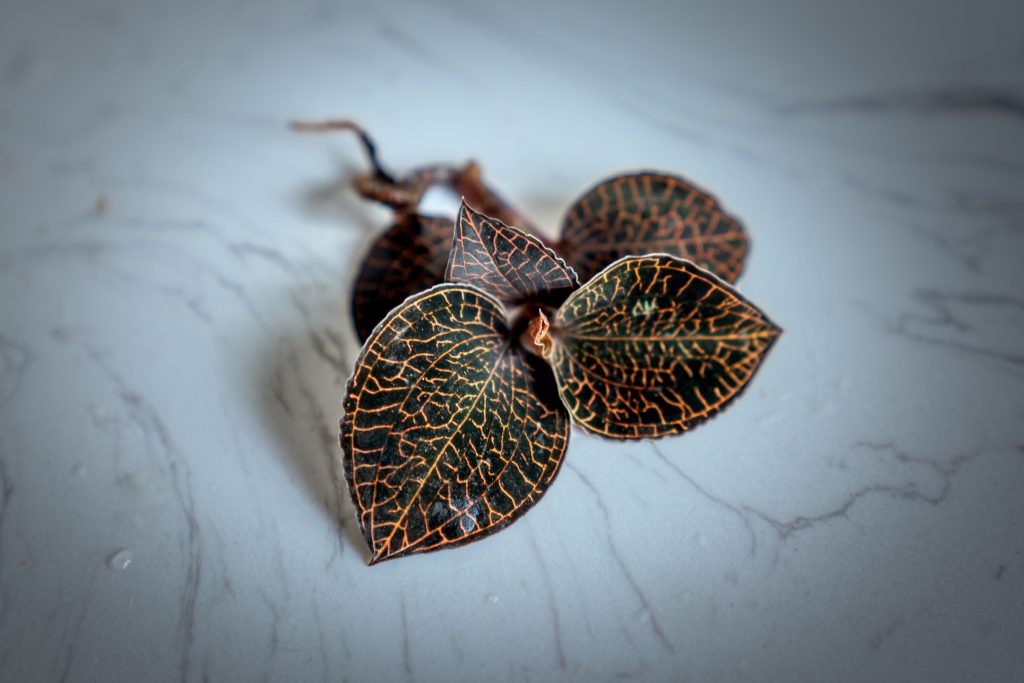
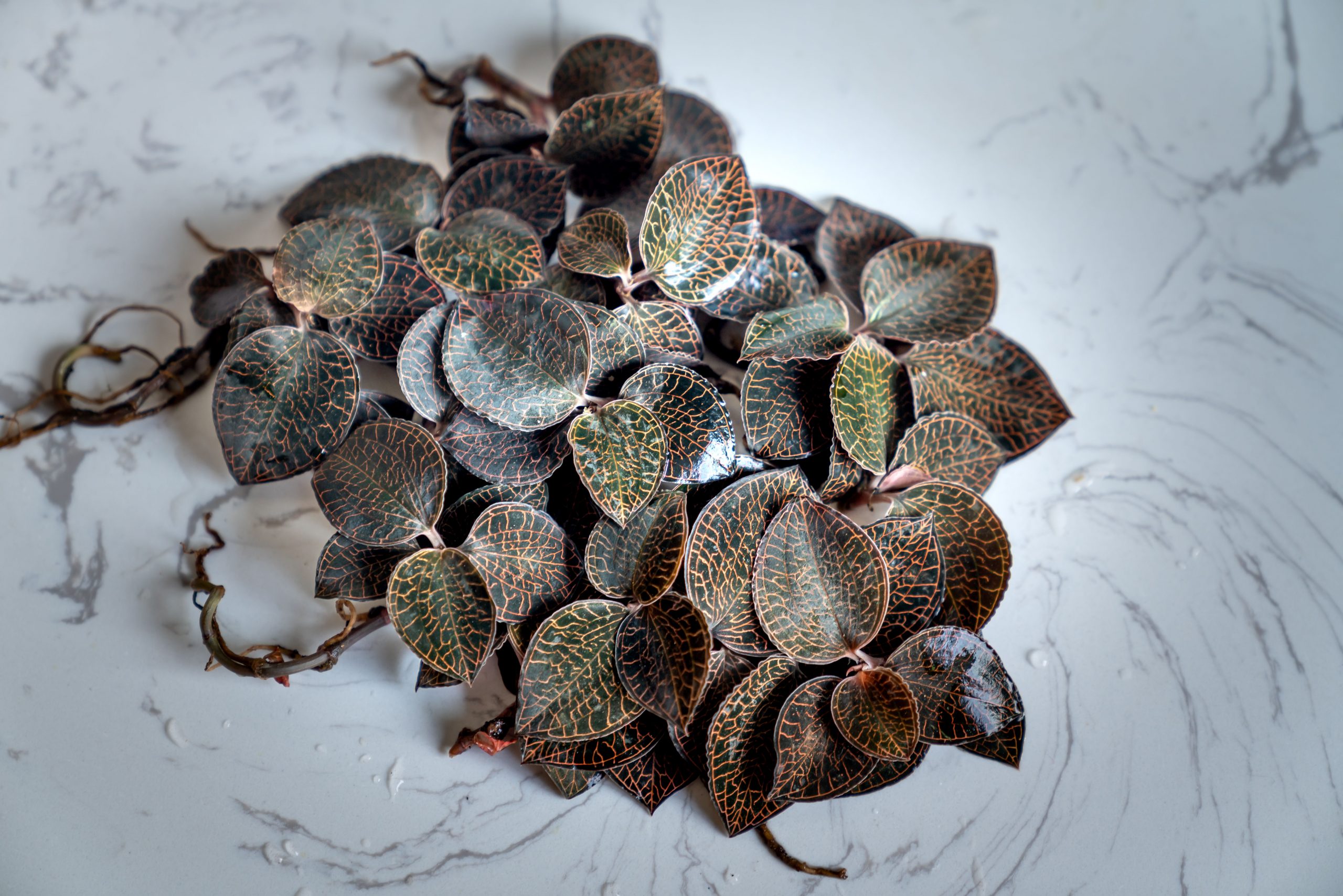
Jewel orchids stand apart from the rest of the orchid family. Most orchids get grown for their flowers. These get grown for their leaves. Deep green foliage laced with silver, red, or gold veining makes them look almost hand-painted. When these orchids get the right conditions, their foliage stays vibrant for years. This guide covers everything you need to keep a jewel orchid thriving.
What Makes Jewel Orchids Different
A Terrestrial Orchid, Not an Epiphyte
Most orchids people know, like Phalaenopsis, are epiphytes. They grow on trees, with roots exposed to open air. Jewel orchids break that pattern entirely. They are terrestrial, growing along the forest floor and do not climb upward. Their creeping, rhizomatous stems spread horizontally across leaf litter instead of anchoring to bark. This difference makes their care different from other orchids.
Where Jewel Orchids Come From
Jewel orchids originate mostly from the tropical forests of Southeast Asia and the Pacific Islands. These include Myanmar, Vietnam, Thailand, Malaysia, and Indonesia. Some species also occur naturally in Hawaii and parts of North America. In the wild, they grow at elevations between roughly 1,600 and 3,000 feet. They are tucked into damp shade on the forest floor. That environment, low light and constant moisture, explains why these plants adapt so well to home terrariums and dim corners of a room.
Common Genera and Their Patterns
Several genera fall under the jewel orchid umbrella, each with distinct leaf markings. Ludisia discolor is the most popular and beginner-friendly. It has distinctive deep, reddish-veined stripes. Anoectochilus species carry marbled, criss-crossing patterns. Macodes petola stands out with gold veining that resembles small lightning bolts. Goodyera species show white or pale green veins against green foliage. Knowing which genus you own helps you fine-tune light and moisture levels.
Potting Medium: Getting the Foundation Right
Why a Standard Orchid Mix Won’t Work
Because jewel orchids belong to the orchid family, people assume a standard bark-heavy orchid mix will suit them. It won’t. Bark-based mixes are built for epiphytic roots that want maximum airflow and low moisture retention. Jewel orchid roots need the opposite. They require consistent moisture and a denser structure closer to what they’d find on a forest floor.
Peat and Perlite Mix
One reliable option combines roughly equal parts peat moss and perlite. The perlite lightens the density. It keeps the mix from compacting too tightly. This blend holds moisture well, so water only once the top layer feels dry to the touch. Persistent overwatering in this mix raises the risk of root rot quickly. This is because the density holds water for a fair amount of time.
A Bark and Moss Blend
A lighter alternative uses a smaller portion of bark, around 20 percent. It is combined with roughly 50 percent sphagnum moss and 30 percent perlite. This version dries out faster than the peat-based mix. Thus, watering needs to happen more often, sometimes every other day depending on your home’s humidity.
Sphagnum Moss as a Standalone Medium
Pure sphagnum moss is another workable option for jewel orchids, particularly for moisture-loving genera like Macodes. Spagmoss, sourced from the wetlands of New Zealand’s South Island, holds an exceptional 20 times its own weight in water. It gives jewel orchid roots the steady moisture they crave in this kind of setup. It’s harvested from the species Sphagnum cristatum, known for longer, sturdier strands compared to other moss varieties. This moss also naturally contains tropolene.
The compound helps inhibit bacterial and fungal growth around the roots. This is quite beneficial given how prone jewel orchids are to root rot in consistently moist media.
Used on its own, sphagnum moss requires attention as it ages. It compacts over time, which can eventually trap excess water. Repotting every 8 to 10 months helps prevent this from becoming a problem. Mist lightly if you notice the surface drying out between waterings.
Layered Substrate for Terrariums
Growers building a terrarium often layer their substrate instead of mixing it. A base of sand or gravel goes down first. It is followed by a layer of bark and perlite, topped with a layer of moss. This approach works especially well in enclosed environments. Here, the layered structure keeps drainage functional while the top layer stays consistently moist.
Light Requirements
Bright, Indirect Light Is Ideal
Jewel orchids grow in dappled shade in the wild, and their indoor lighting should reflect that. Direct sunlight scorches their thin leaves quickly, causing browning or a bleached, faded look. But deep shade isn’t ideal either. Too little light can cause the leaves to lose their striking variegation as the plant produces more chlorophyll to compensate.
Finding the Right Spot Indoors
An east-facing window, or a north-facing room with filtered light, generally works well. If natural light is limited, LED grow lights set to medium intensity for around 12 hours a day support healthy growth. A simple way to test your spot: hold your hand above the plant. A soft, faint shadow signals good light. No shadow at all means the spot is too dim. A dark shadow means it’s too intense.
Watering Jewel Orchids
Check Before You Water
Jewel orchids like consistent moisture. But they hate sitting in standing water. Check the top one to three inches of the growing medium before each watering. If it feels dry, it’s time to water thoroughly. If it still feels damp, wait a few more days and check again. This prevents the two most common causes of decline. These are drought stress and root rot.
Water Quality Matters
Use room-temperature distilled or filtered water. Tap water carries minerals that build up in the growing medium over time. It can stress the roots. Cold water straight from the tap can also shock the plant. It sometimes shows up as yellowing along the leaf edges.
Two Watering Techniques
Top watering means pouring water directly into the medium, lifting the leaves aside to keep them dry. Bottom watering involves setting the pot in a shallow tray of water and letting moisture wick upward through the medium. Bottom watering works particularly well with faster-draining mixes like the bark-and-moss blend. It reduces how often you need to water from above.
Humidity and Temperature
Recreating a Rainforest Floor
Jewel orchids thrive in humidity between 50 and 70 percent, though most homes sit closer to 30 to 50 percent, which is usually tolerable. Grouping plants together, using a pebble tray, or running a small humidifier all help raise humidity around the plant. Bathrooms and kitchens, with their naturally higher moisture levels, often make surprisingly good spots for jewel orchids.
Keeping Temperatures Stable
Room temperature suits jewel orchids well. Keep it between 60°F and 78°F. They can tolerate brief spikes up to the mid-90s without lasting harm. Cold is more dangerous than heat for this plant. Keep temperatures above 50°F. Position pots away from drafty windows or air conditioning vents during colder months.
Feeding and Fertilizing
Light Feeders by Nature
Jewel orchids don’t need heavy fertilization to stay healthy. A diluted liquid fertilizer should be applied at half strength every two to four weeks during spring and summer. It provides plenty of nutrition. Some growers use a fertilizer blend with a slightly higher phosphorus ratio during the growing season. It encourages flowering later on.
When to Hold Back
Skip fertilizing entirely during fall and winter, when growth naturally slows. Also avoid feeding while the plant is actively flowering. The extra nutrients can stress it during that period rather than help it.
Repotting
Signs It’s Time
Jewel orchids typically need repotting every one to three years. The exact time depends on their genus and growth rate. Watch for tangled or overcrowded roots, soft brown shoots, or leaf drop without an obvious cause. Jewel orchids grow horizontally through their rhizomes. Thus, a wide, shallow pot suits them far better than a deep one.
The Repotting Process
Gently remove the plant and inspect the root system. Trim away any roots that look dark, mushy, or hollow. Fill the new pot with fresh medium. Now, position the main stem centrally, and tuck any additional stems near the pot’s edge. Cover with more mix and water thoroughly to help the roots settle in.
Blooming and Flower Care
What to Expect From the Flowers
Jewel orchids do produce flowers which are small and white. But they take a back seat to the foliage. Many growers barely notice them. Blooming most often happens in late fall through early spring, following a period of mild stress during the prior growing season, such as slightly reduced watering.
Encouraging or Discouraging Blooms
If you want your jewel orchid to flower, a brief period of reduced watering and slightly cooler conditions in early fall can help trigger it. If you’d rather the plant put its energy into foliage instead, pinch off flower stalks as soon as they appear. Once flowers fade naturally, trim the spent stalk back to the base with clean shears.
Common Problems and How to Fix Them
Root Rot
Root rot shows up as black spots, a foul smell, or leaves that look collapsed and wilted. If you catch it, remove the plant from its pot. Trim away any rotting roots with sterilized tools. Then repot into fresh, well-draining medium. Reducing watering frequency afterward helps prevent a repeat.
Yellowing or Browning Leaves
Occasional lower-leaf yellowing is normal as the plant ages. Widespread yellowing paired with dark stems usually points to overwatering. Crispy, browning leaf edges signal low humidity or too much direct light. Adjust one variable at a time to discover the cause.
Fading Variegation
If the colorful patterning starts turning plain green, the plant likely needs brighter, indirect light. If leaves look pale or washed out instead, the opposite is true. The plant needs to move further from direct sun.
Pests
Mealybugs, scale, and spider mites occasionally show up on jewel orchids. Wipe visible pests away with an alcohol-dipped cloth. Alternatively, rinse the plant gently under running water to dislodge them. Isolating an infested plant helps keep pests from spreading to your other houseplants.
Foliage Worth the Extra Attention
Jewel orchids reward patience with a unique feature. They grow leaves that look almost too detailed to be real. Their care differs from typical orchids in nearly every way. But once you understand what sets them apart, from their terrestrial roots to their moisture-loving nature, their maintenance becomes far more intuitive. Watch the leaves closely, adjust light and watering as needed, and this colorful plant will keep earning its place as the centerpiece of any collection.
FAQs
Are Jewel Orchids hard to take care of?
Not particularly, though they are more sensitive than typical houseplants. Success depends on getting moisture, light, and medium right. Avoid standard orchid bark mixes and check soil moisture regularly. With consistent attention, jewel orchids grow reliably and reward you with striking, colorful foliage.
Do Jewel Orchids prefer sunlight or shade?
They prefer bright, indirect light rather than full sun or deep shade. Direct sunlight scorches their leaves, while too little light fades their variegation over time. An east-facing window or filtered north light usually provides the right balance for healthy, colorful growth.
What type of fertilizer is best for Jewel Orchids?
A diluted liquid fertilizer works best, applied at half strength every two to four weeks during the growing season. A slightly higher phosphorus ratio can support blooming. Avoid fertilizing during fall, winter, or while the plant is actively flowering to prevent unnecessary stress.
How to get a Jewel Orchid to bloom?
Mimic a mild dormancy period in early fall by reducing watering slightly and lowering the surrounding temperature. This gentle stress often triggers flowering through winter into early spring. Consistent light and feeding during the prior growing season also improve the odds of a bloom.