
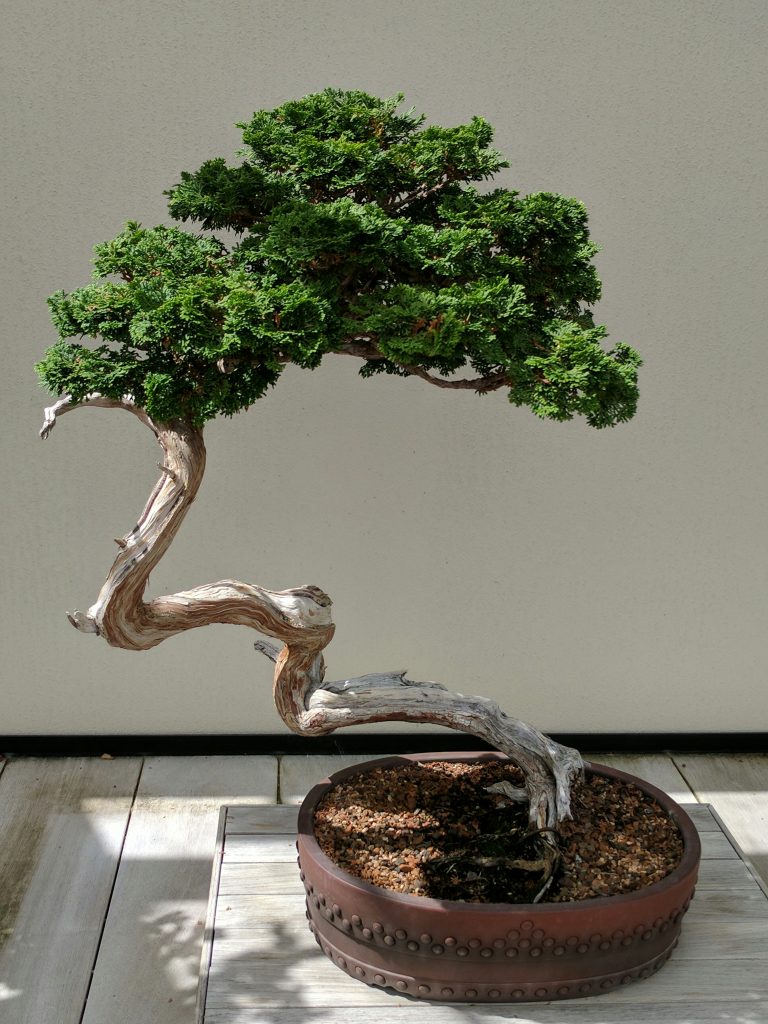
A bonsai lives in a shallow pot for years or decades. This small space leaves little room for error below the soil line. The mix needs to hold enough water to carry the tree between waterings. It needs to drain fast enough to avoid root rot. It also needs enough air pockets to keep roots breathing. Balancing these three demands is what keeps a bonsai thriving.
What Potting Mix Is Best for Bonsai?
Water Retention
A bonsai pot holds a small volume of soil compared to the tree’s needs. That soil has to hold enough moisture to supply the roots between each watering session. Too little retention, and the tree dries out fast, especially during hot weather. The organic component in a mix, typically bark, does most of this water-holding.
Drainage
Excess water must leave the pot quickly after every watering. A mix that drains poorly stays soggy and starves the roots of oxygen. It allows salts from fertilizer and tap water to build up over time. Good drainage is non-negotiable in bonsai culture. Even a few days of standing water can damage fine feeder roots beyond recovery.
Root Aeration
Roots need oxygen just as much as they need water. A good mix contains particles large enough to leave small gaps between them once packed into the pot. These gaps let air reach the root zone continuously. Without them, roots suffocate slowly. This is true even if the mix looks fine on the surface.
Appropriate Particle Size
Particle size ties directly into both drainage and aeration. Fine particles pack tightly. They hold more water and less air. Coarser particles create more space between them. They drain faster and let more oxygen through. Most bonsai mixes aim for particles in the range of an eighth of an inch to a quarter inch. However, this shifts slightly depending on pot size and tree species. To keep the mix consistent from top to bottom, sift out dust and oversized chunks before potting.
Organic and Inorganic Components
A well-built bonsai mix combines organic material with inorganic, mineral-based aggregate. The organic portion, usually bark, supplies water retention. It also houses many good microbes. The inorganic part contains pumice or lava rock. It gives the mix its structure and provides lasting drainage without breaking down.
Can You Use Pine Bark in Bonsai Potting Mix?
Pine bark is commonly used as the organic component in bonsai mixes. It can help retain moisture while creating air spaces between particles. Growers favor it because it strikes a workable balance. Enough structure to resist rapid breakdown and enough surface area to hold water and nutrients. It also has a slightly acidic pH that suits most bonsai species.
But all types of pine bark do not perform in the same way. Raw or composted bark tends to break down within a season or two. This is especially so in humid climates or with frequent watering. Once it breaks down, the mix loses its air pockets. It starts holding more water than intended.
Orchiata is a pine bark from New Zealand that has undergone aging. It acts as an organic part of the potting mix. The bark has a consistent particle size. This allows it to create even drainage and aeration. Simultaneously, its surface can hold onto water and plant food.
Rather than composting the bark, Orchiata goes through an eleven-step aging process. It conditions the outer surface to better hold moisture and nutrients without breaking down the wood’s inner structure. That surface conditioning is what gives it the ability to hold moisture and nutrients and resist the rapid decay that standard bark products undergo. Sifting and grading during production also removes most dust. Thus, the bark drains evenly and consistently across the pot rather than clogging in certain spots.
Which Orchiata Grade Is Best for Bonsai?
Orchiata comes in a few different grades, sorted by particle size. Two of them are commonly selected for the organic portion of bonsai soil mixes.
Precision grade runs from about one-eighth to one-quarter inch. This finer size suits smaller bonsai pots and shohin-sized trees. It is also suitable for when growers want a slightly denser mix with a bit more moisture retention between waterings.
Classic grade runs from about one-quarter to three-eighths inch. This larger particle size creates more air space in the pot. This makes it a strong fit for bigger trees and deeper training pots. It is also right for growers working in especially humid climates who want faster drainage.
Both grades share Orchiata’s consistent pH range, typically between 5.4 and 6. It aligns with the neutral-to-slightly-acidic preference most bonsai species share. That consistency also removes some of the guesswork growers face when blending a mix from scratch. This is because the organic component behaves the same way from one bag to the next.
How To Make Your Own Bonsai Potting Mix?
Check Before You Water
A bonsai mix typically combines an organic material with inorganic components. Orchiata can provide the organic portion. Materials such as pumice, lava rock, or akadama can provide additional drainage and structure. Orchiata is not meant to serve as a complete bonsai potting mix on its own. It functions as the pine-bark component within a larger blend, alongside one or more mineral aggregates.
A commonly used ratio for many bonsai species starts with equal parts by volume
- One part bark
- One part pumice
- One part lava rock or akadama
From that neutral starting point, growers adjust the ratio to suit their climate and species. In hot, humid regions, increasing the pumice to somewhere between 40 and 50 percent helps the mix stay well-drained even after frequent watering. In dry or arid climates, increasing the bark or akadama portion toward 50 to 60 percent helps the mix hold onto moisture longer between waterings.
A simpler, budget-friendly starting recipe for a beginner-friendly mix looks like this:
- Roughly 40 percent graded pine bark
- 30 percent pumice
- The remaining 30 percent split between a nutrient-holding aggregate like zeolite or akadama and a coarse material like grit or perlite for extra drainage.
Mix the dry ingredients together thoroughly before lightly dampening the blend. A damp mix settles more evenly around the roots during potting. It keeps dust from floating everywhere while you work.
Before trusting any new mix with a valued tree, run a simple soak test. Fill a spare pot with the blended mix. Water it thoroughly, the way you would after a real repot. Water should pass through quickly without pooling on the surface. The pot should feel damp rather than waterlogged once it finishes draining. If water sits on top or drains slowly, add more pumice or lava rock. Do so until the mix behaves the way it should.
What Ingredients Can You Use in Bonsai Mixes?
Pine Bark
As covered above, pine bark forms the organic backbone of most bonsai mixes. It retains water and nutrients on its surface while creating structure between particles. Bark quality varies significantly between suppliers, with aged products like Orchiata resisting compaction far longer than raw or composted alternatives.
Akadama
Akadama means “red ball earth.” It is a natural, clay-like volcanic material mined in Japan. It is commonly used to grow bonsai trees, succulents, and cacti. It is also used in aquascaping.
It has long been considered a gold standard for conifers and deciduous bonsai species. Its porous internal structure holds both water and fertilizer between feedings. Thus, it gives roots consistent access to nutrients. Softer grades of akadama can break down within a few humid seasons. Harder, double-line grades often last five years or more before needing replacement.
Pumice
Pumice is a lightweight, porous volcanic glass. It drains quickly while still holding a thin film of moisture on its surface. Because it contains very little clay, pumice resists compaction even through long, hot growing seasons. It’s typically rinsed and screened before use to remove fine dust particles that could otherwise clog the top layer of the pot.
Lava Rock
Lava rock is angular and durable. It holds its shape for a decade or longer in most conditions. Many conifers seem to benefit from the small trace of iron it contributes to the mix. Its main drawback is weight, since large pots filled with a high percentage of lava rock can become genuinely heavy. This is something worth considering for bigger display trees on lightweight benches.
Perlite
Perlite offers many of the same aeration benefits as pumice at a lower cost. But it tends to float when watered heavily. It can also break down slightly faster over time. It works well as a supplementary drainage material in a mix for growers building a budget-friendly blend without sourcing multiple specialty aggregates.
Other Organic Materials
Beyond pine bark, a few other organic materials are a part of bonsai mixes in some cases. Parboiled rice hulls offer drainage benefits similar to perlite in a renewable, low-cost package. Research suggests they can substitute for perlite without sacrificing aeration. Kanuma, a softer and more acidic volcanic material than akadama, gets used almost exclusively for azalea bonsai. This is because these trees prefer notably low-pH, moisture-retentive conditions. Coarse sand or grit occasionally appears in small quantities too. It is mainly to add stability and weight to lighter mixes.
Repotting and Maintaining Your Mix
Even a well-built bonsai mix breaks down eventually. Organic particles decompose gradually. Mineral aggregates can fracture into finer pieces after repeated watering cycles. As this happens, drainage slows, and air space shrinks. This is exactly when growers start noticing yellowing leaves or water that seems to sit on the surface for much longer.
Young or developing bonsai typically need repotting every one to two years. Their vigorous root growth fills the pot relatively quickly. Mature, refined bonsai can often go two to four years between repotting.
During repotting, gently remove old soil from the root ball rather than stripping it away entirely. Trim back roughly 20 to 30 percent of any long, circling roots. Then settle the tree into fresh mix, working it carefully into the gaps around the root system to eliminate air pockets. Water thoroughly after potting, until the runoff from the drainage holes runs clear.
Roots That Hold the Whole Tree Together
A bonsai’s canopy gets all the attention, but the mix beneath the surface is what keeps that canopy alive for years. Balancing water retention, drainage, and aeration isn’t about finding one perfect recipe. It’s about understanding how each ingredient behaves and adjusting the blend to match your tree, your pot, and your climate. Durable organic components like Orchiata, paired with the right mineral aggregates, give bonsai roots a stable foundation that holds up for many seasons.
FAQs
How to make your own bonsai potting mix?
Combine an organic component like pine bark with one or two inorganic aggregates such as pumice, lava rock, or akadama. Start with roughly equal parts of each, sift out dust and oversized particles, then blend thoroughly. Adjust the ratio based on your climate and how your chosen tree species prefers moisture.
What can I use as an alternative to bonsai potting mix?
Parboiled rice hulls can substitute for perlite in a pinch, offering similar drainage at a lower cost. Chicken grit and coarse sand can stand in for some of the mineral aggregate as well. Avoid regular garden soil or standard potting mix entirely, since both compact and retain far too much water for bonsai roots.
Can bonsai survive two weeks without water?
Generally, no. Bonsai live in shallow pots with a limited soil volume, so they dry out much faster than trees growing in the ground. Most bonsai need watering every few days, sometimes daily in hot weather. Two weeks without water would likely cause serious stress or death for most species.
Can I use normal soil for bonsai?
No, regular garden soil or standard potting mix is not suitable for bonsai. These soils compact easily in a shallow pot, holding too much water and starving roots of oxygen. A proper bonsai mix, built from bark and mineral aggregates, provides the drainage and aeration that normal soil simply can’t offer.