
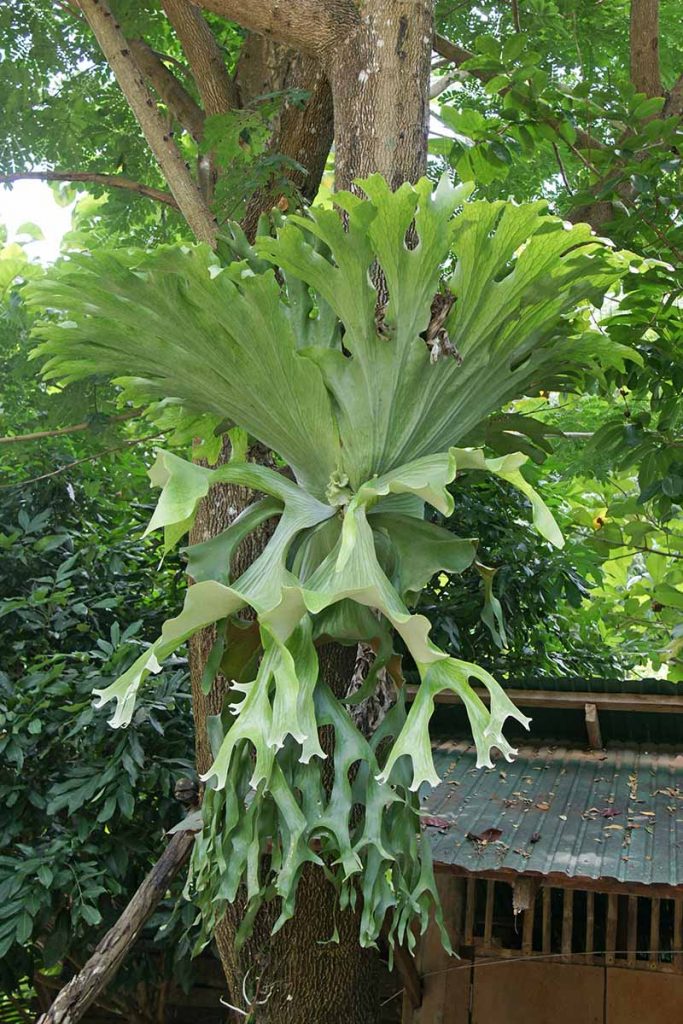
Staghorns, commonly known as Platycerium bifurcatum (and other Platycerium species), are not typical houseplants. They are epiphytes. That means they do not grow in soil. Instead, they attach themselves to trees in their native habitats. They are present across tropical and subtropical regions like Australia, Southeast Asia, and parts of Africa.
In the wild, they sit high up on tree trunks. Rainwater runs over their roots. Air moves freely around them. Nothing stays soggy for long. This natural setup is very different from a pot filled with dense soil or compacted moss.
And yet, many people treat them like regular plants.
If a staghorn has ever turned brown, limp, or simply stopped growing, the cause is often the same. Poor airflow. Too much or too little moisture. An unsuitable growing medium working against the plant.
But once this is understood, most problems become easy to fix.
Understanding Staghorn Fern Care Starts with the Right Medium
Before getting into tips, it helps to understand what the plant actually needs.
A staghorn fern wants:
- Air around its roots
- Moisture that does not stay trapped
- A stable base that does not break down
That is exactly why New Zealand tree fern stands out as a growing medium.
It has a strong, fibrous structure. It holds water but never feels soggy. And unlike bark, it does not break down over time. In fact, many growers say it lasts so long that repotting becomes rare.
That alone solves half the problems people face.
Staghorn Anatomy Basics
Staghorns have two very different types of fronds. Each one has a job. Mixing them up often leads to mistakes.
Antler Fronds vs Shield Fronds
| Frond Type | What It Looks Like | What It Does |
| Antler Fronds | Long, forked, leaf-like | Photosynthesis and growth |
| Shield Fronds | Round, flat, layered at base | Protects roots and holds moisture |
Antler Fronds
These are the ones most people notice first.
- They grow outward and downward
- They look like deer antlers
- They give the plant its dramatic shape
Most importantly, they help the plant grow by capturing light If these look healthy and green, the plant is generally doing well.
Shield Fronds
Shield fronds:
- Grow flat against the base
- Start green, then turn brown over time
- Form layers around the roots
At first glance, they may look dead when they turn brown. But they are not.
They are doing important work:
- Protecting the root system
- Holding moisture
- Anchoring the plant to its base
The Biggest Mistake: Removing Brown Shield Fronds
Growers often see brown, dry-looking fronds and think they should be cleaned.
No. Never remove them.
Here’s why:
- They act like a natural barrier
- They help retain moisture around the roots
- Removing them exposes the plant to stress
Shield fronds work closely with the growing medium. When using a stable, breathable medium like tree fern:
- Moisture stays balanced
- Roots stay protected
- The shield fronds can do their job properly
If the medium is poor, even healthy fronds struggle.
Tip 1: Choose Tree Fern for Long-Term Success
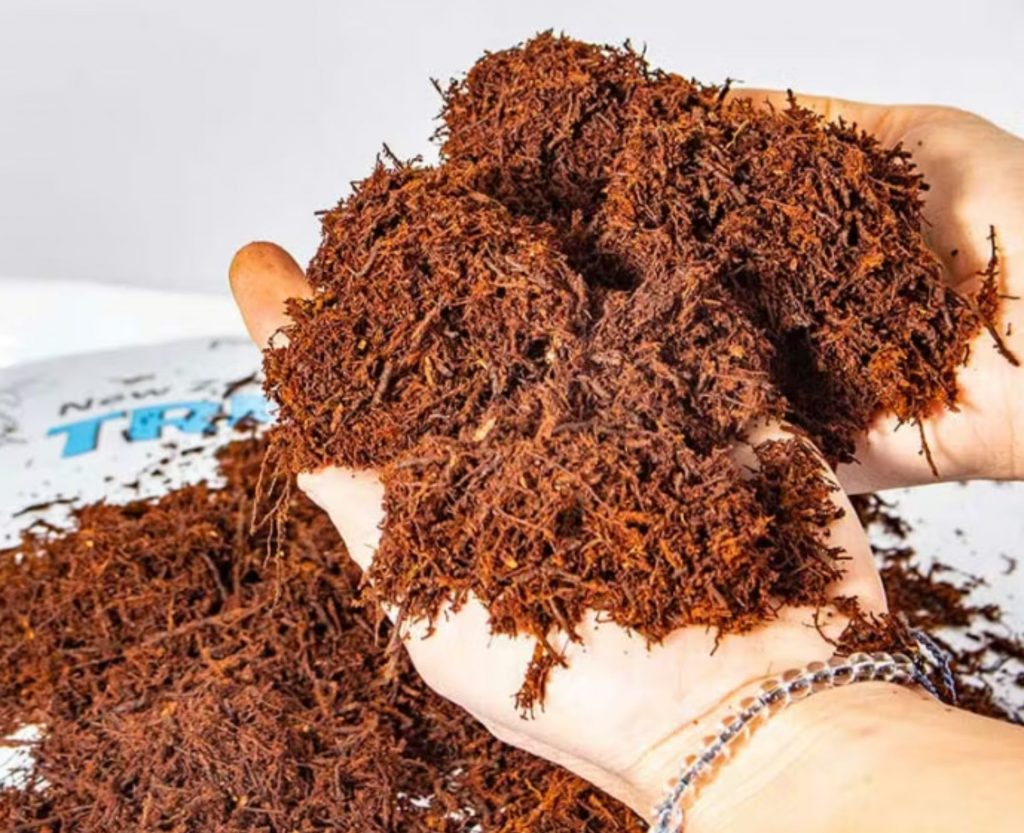
Most beginners start with moss or random bark mixes. It seems easy at first. But after a few months, things go downhill.
Why?
Because those materials:
- Break down
- Hold too much water
- Lose airflow
Tree fern behaves differently.
- It holds moisture while keeping air pockets open
- It requires less watering than bark
- It stays stable for years
This means fewer mistakes. Less guesswork. Better results.
If the goal is to keep a staghorn alive and thriving for years, not just months, this is the medium to rely on.
Tip 2: Learn the Moisture Signals (Stop Guessing)
One of the most frustrating parts of staghorn fern care is watering. Too much water leads to rot. Too little dries it out.
Tree fern makes this much easier.
It gives clear signals:
- Dark brown = still moist
- Light brown = time to water
- Heavier weight = damp
- Lighter weight = dry
Pick up the mount once. Then again a day later. The difference becomes obvious.
This simple habit removes the need to “guess” watering schedules.
Tip 3: Prioritize Airflow Over Everything
Staghorns hate suffocation. Roots need to breathe.
Many people pack moss too tightly or use dense mixes. That traps moisture. And trapped moisture leads to rot.
Tree fern solves this naturally.
Its fibrous structure:
- Keeps air moving
- Prevents compaction
- Supports healthy root growth
Think of it like a sponge that never collapses.
If airflow is right, the plant stays happy. If not, problems show up fast.
Tip 4: Mount It the Right Way
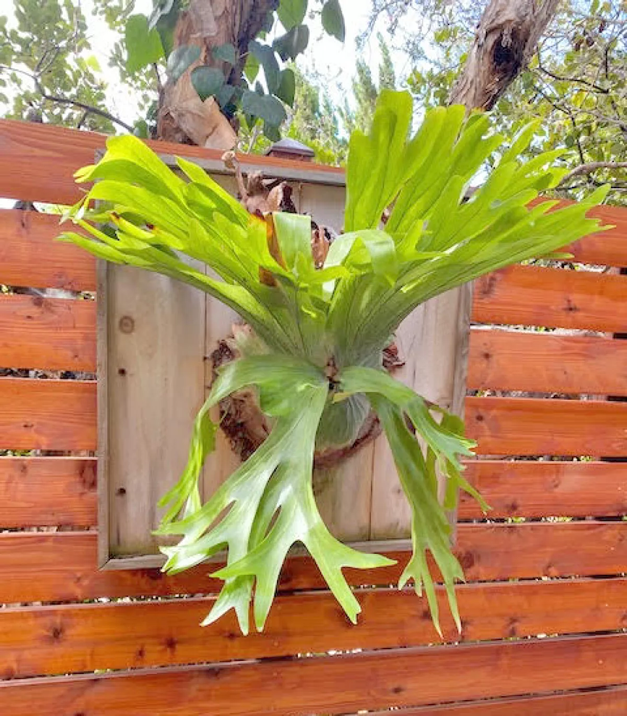
Staghorns are meant to be mounted. That is how they grow in nature, attached to trees with air all around their roots. So it is worth knowing how to mount them properly from the start.
Start with the Right Base
Go with wood that can handle humidity:
- Cedar → durable and naturally rot-resistant
- Cork bark → lightweight, natural look, excellent for mounts
Size also matters.
- Small plant → 6–8 inch board
- Medium plant → 10–12 inch board
- Larger plant → go bigger to allow future growth
Build a Proper Base with Tree Fern Fiber
This is the most important layer.
Instead of using sphagnum moss, use tree fern fiber. It creates a more stable and breathable base.
Here’s why it works better:
- Does not compact over time
- Holds moisture without staying soggy
- Keeps airflow consistent around roots
Sphagnum moss, on the other hand, can:
- Pack too tightly
- Hold excess water
- Increase the risk of rot if not handled carefully
Tree fern fiber gives a more forgiving setup, especially for long-term growth.
How to Prepare the Fiber Layer
Keep this step simple:
- Take a small handful of tree fern fiber
- Lightly moisten it (not soaking wet)
- Place it in the center of the board
Do not press it down too hard. The goal is to keep it airy and loose, not dense. This layer acts as the cushion where roots will settle.
Position and Secure the Plant
Now place the staghorn on top of the fiber.
- Keep the shield fronds flat against the base
- Let the antler fronds face outward
To secure it:
- Use soft twine or fishing line
- Wrap gently around the base
- Tie it snug, but not tight
Tip 5: Stop Repotting So Often
Many plant owners fall into a cycle. Repot every year. Change the mix. Adjust things again.
It becomes a routine. But it is not necessary.
Tree fern changes that.
Because it:
- Resists breaking down
- Maintains structure over time
- Stays consistent
There is no need to repot until the plant outgrows its base.
This saves:
- Time
- Effort
- Money
And honestly, it removes a lot of stress.
For anyone who dislikes repotting, this is easily the best option.
Tip 6: Balance Light and Moisture Together
Light and watering go hand in hand.
More light means:
- Faster drying
- More frequent watering
Less light means:
- Slower drying
- Less watering needed
With tree fern, this balance becomes easier to manage.
Because it holds moisture well, the plant does not dry out too quickly. But it also does not stay wet for too long.
Place the plant in:
- Bright, indirect light
- Good airflow
Then observe how fast the medium changes color. That tells everything needed about watering frequency.
Humidity & Temperature (What Your Staghorn Really Needs)
Staghorn ferns like a stable environment. In the wild, they grow in tropical forests. So it makes sense that they prefer similar conditions at home.
Ideal Range
| Factor | Ideal Range |
| Humidity | 50% to 80% |
| Temperature | 60°F to 80°F (15°C to 27°C) |
Why Humidity Matters So Much
Staghorns absorb moisture from the air. When humidity is too low:
- Fronds may dry at the edges
- Growth slows down
- The plant looks tired
On the other hand, when humidity is in the right range, the plant feels “at home.” Leaves stay firm. Growth becomes steady.
An Easy Trick: Bathroom Placement
Bathrooms often have:
- Higher humidity
- Stable temperatures
- Indirect light (in many homes)
So if there is a bright bathroom window, that can be a great spot.
After a warm shower, the air becomes slightly humid. The plant benefits from that without any extra effort.
Tip 7: Avoid These Common Mistakes
Even with the right setup, a few mistakes can still cause trouble.
Here are the most common ones:
Overwatering
Watering too often without checking moisture leads to rot.
Using low-quality moss
Not all moss is equal. Inferior moss compacts and traps water.
Ignoring airflow
Closed, humid spaces without airflow create problems quickly.
Frequent remounting
Disturbing the plant too often slows growth.
Choosing the wrong medium
Cheap bark mixes break down fast and cause instability.
Each of these issues becomes much less likely when the right medium is used from the start.
Why New Zealand Tree Fern Stands Out
Not all tree fern is the same.
For years, growers relied on a material called Osmunda. It was widely used and trusted. But over time, it became endangered and was no longer a viable option. That left a gap. Growers needed something that could match its performance without harming the environment.
This is where New Zealand tree fern, specifically Dicksonia fibrosa, comes in.
It is now considered one of the most reliable growing media available. In many ways, it performs even better.
What Makes Dicksonia fibrosa Different
This species has a dense, fibrous structure. It holds its shape over time. It does not collapse or break down like other materials.
That means:
- Roots stay supported
- Airflow remains consistent
- Moisture stays balanced
Most importantly, this does not change after a few months. It stays stable for years.
Sustainably Sourced and Responsible
There is also an environmental side to this.
New Zealand tree fern is:
- Sustainably harvested
- Carefully managed to avoid depletion
- Collected in a way that supports long-term supply
This makes it very different from older materials like Osmunda, which faced issues due to overharvesting.
So while the performance is strong, the sourcing is responsible too.
How It Compares to Other Growing Media
| Medium | What Works | Where It Falls Short |
| Tree Fern (Dicksonia fibrosa) | Long-lasting, stable, balanced moisture and airflow | Higher upfront cost |
| Bark (even good bark) | Good airflow at first | Breaks down over time, needs repotting |
| Sphagnum Moss | Holds moisture well | Easy to overpack, can stay too wet |
| Coco Coir | Holds water | Often too dense, can limit airflow |
The Built-In Moisture Indicator (A Game Changer)
Tree fern gives clear visual and physical cues:
- Dark brown color → still moist
- Light brown color → time to water
- Heavier pot → damp
- Lighter pot → dry
Instead of guessing or following a strict schedule, watering becomes intuitive. Just a quick look or a lift is enough to know what the plant needs.
A growing medium does more than hold the plant in place.
It controls:
- How roots breathe
- How water moves
- How stable the environment stays over time
When the medium breaks down or holds too much water, roots suffer first. Once roots struggle, the whole plant follows.
Tree fern avoids these issues by staying:
- Clean
- Stable
- Well-balanced
So, What Should You Choose?
If the goal is:
- Less guesswork
- Fewer repots
- Better long-term results
Then New Zealand tree fern (Dicksonia fibrosa) is the clear choice.
The Real Secret Behind Healthy Staghorns
Most people think success comes from:
- Perfect watering schedules
- Fancy fertilizers
- Constant adjustments
But experienced growers know the truth.
It starts with the medium.
Get that right, and:
- Watering becomes simple
- Roots stay healthy
- Growth improves naturally
Tree fern takes away the complexity. It replaces trial and error with consistency.
Key Takeaways for Better Staghorn Fern Care
- Choose a medium that lasts and breathes
- Use visual cues like color and weight to guide watering
- Focus on airflow, not just moisture
- Avoid frequent repotting unless necessary
- Keep things simple and stable
A staghorn fern does not need constant attention. It needs the right environment.
And once that environment is in place, the plant does what it does best. It grows, spreads, and becomes a statement piece over time.