
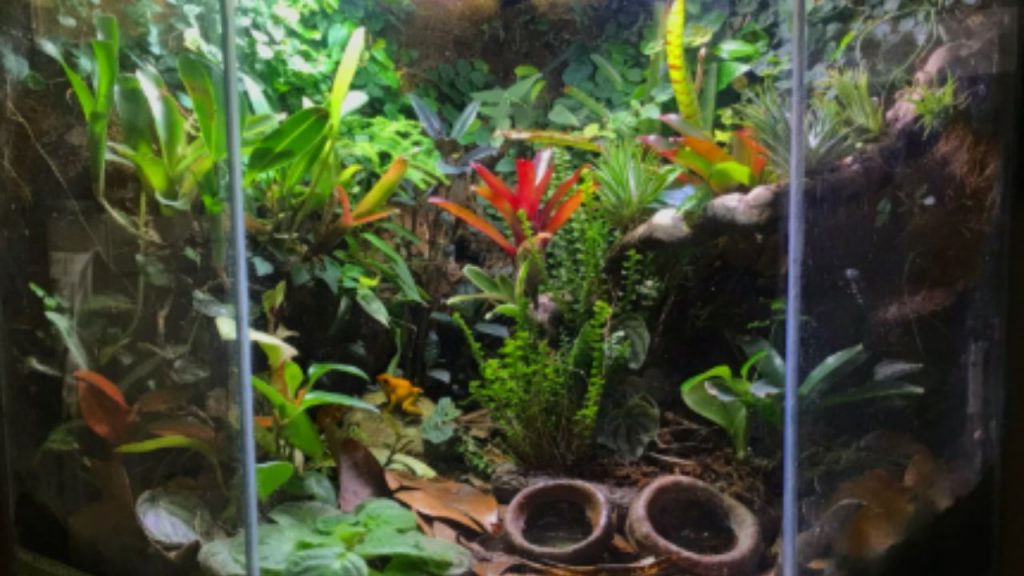
A bioactive terrarium is a self-sustaining ecosystem. It’s a living world where plants, animals, beneficial microbes, and cleanup crews work together to stay healthy and balanced.
This guide shares the top 10 essential tips to build a bioactive terrarium that truly works. It’s made for reptiles and amphibians, including setups for crested geckos, snakes, and simple DIY bioactive builds.
How It Works: The Bioactive Nitrogen Cycle
A bioactive terrarium is not just soil and plants. It is a living system. And the system runs on one simple process, the nitrogen cycle.
This is how waste becomes plant food. And how your enclosure stays clean and balanced.
Step-by-step flow
Waste enters the system
- Animal waste
- Leftover food
- Dead leaves
- Shed skin
- Plant debris
All of this becomes organic waste in the soil.
Beneficial bacteria go to work
Two main types of bacteria break it down:
Aerobic bacteria (with oxygen):
- Live in well-aerated soil
- Break waste into ammonia
- Start the cleanup process
Anaerobic bacteria (low oxygen):
- Live deeper in soil layers
- Continue nutrient breakdown
- Help stabilize the system
Conversion into plant nutrients
The process looks like this:
| Stage | What Happens |
| Waste | Organic matter builds up |
| Ammonia | First breakdown product |
| Nitrites | Bacteria convert ammonia |
| Nitrates | Final usable form |
| Plants | Roots absorb nutrients |
Plants take in nitrates as food. Therefore, compost becomes growth.
Where bugs fit in (they’re the cleanup crew)
Bioactive terrarium bugs help the system move faster:
- Isopods
- Springtails
- Microfauna
They:
- Break down waste
- Aerate soil
- Prevent mold buildup
- Feed beneficial bacteria
- Keep soil healthy
Why this matters
When the nitrogen cycle works:
- Smell stays low
- Waste does not build up
- Plants grow better
- Soil stays healthy
- Animals stay safer
- The system stays stable
This is what makes a bioactive terrarium self-sustaining instead of high-maintenance.
What Makes a Terrarium “Bioactive”?
A bioactive terrarium includes:
- Live plants
- Live soil biome
- Microfauna (cleanup bugs)
- Balanced moisture
- Healthy animal habitat
Unlike a regular terrarium, bioactive setups let nature slow-clean the space. It reduces deep cleaning and supports natural behaviors.
This setup mimics real habitats like tropical forests or jungle floors. Thus, it is ideal for geckos, frogs, salamanders, and many reptiles.
1) Plan Your Layout First
Before you add anything:
- Decide tank size
- Decide animal type
- Decide humidity & temperature
- Sketch where plants, hides, and decorations go
This helps you match plants, microfauna, and animals to the right environment.
2) Start With a Drainage Layer
A drainage layer collects excess water. This prevents the soil above from becoming soggy. It stops root rot and harmful anaerobic bacteria from forming.
Materials for drainage:
- Clay balls (LECA)
- Gravel or pumice
- Lava rock
Place a mesh barrier on top so soil doesn’t mix with the drainage layer.
Tip:
In very dry setups (like deserts), you may skip this. But most tropical bioactive builds benefit from it.
3) Build the Bioactive Substrate Layer
This is where the magic happens. Your substrate must:
- Support plant roots
- Hold moisture but not stay soggy
- Provide habitat for microfauna
- Promote air movement
A classic mix includes:
- Leaf litter
- Organic soil
- Orchid bark or coarse wood pieces
- Charcoal
- Coconut coir or sphagnum moss
These materials mimic forest floor structures. They feed cleanup crews like isopods and springtails.
4) Add Your Cleanup Crew (Bioactive Terrarium Bugs)
Cleanup crews are tiny organisms that naturally break down waste. Common and recommending choices include:
- Springtails – eat mold and decaying plant matter
- Isopods – break down leaf litter and help aerate soil
They make your system more natural and reduce cleaning needs.
Tip:
Wait for your substrate to stabilize (about 2–4 weeks) before adding them.
5) Choose the Right Plants (Bioactive Terrarium Plants)
Plants help clean the air, stabilize soil, and give hiding places. Good choices for tropical systems include:
- Ferns
- Mosses
- Bromeliads
- Pothos
- Spider plants
Don’t plant species that prefer dry soil unless you are building a desert bioactive terrarium.
Tip:
Plant plants that match your animal’s needs, like ferns for frogs or vines for geckos.
6) Match Animals to the System
When choosing inhabitants:
- Know the humidity they need
- Know the temperature range
- Know their natural habitat
Bioactive terrarium for crested gecko thrives with plants, vertical space, and humid understory. Bioactive terrariums for snakes need burrowable soil and hiding spots.
Getting this right helps keep animals stress-free and healthy.
7) Manage Water and Humidity
A bioactive terrarium needs balanced moisture:
- Substrate should be damp, not soggy
- Mist lightly daily or automate with a mister
- Drainage layer keeps soil from flooding
Too much water kills roots. Too little water slows growth and microfauna.
8) Provide Proper Airflow
Good airflow helps:
- Roots breathe
- Prevent mold
- Keep humidity balanced
Even in closed systems, small vents or occasional lid opening help air exchange.
9) Light Matters: Choose Appropriate Lighting
Live plants need suitable light to:
- Photosynthesize
- Grow roots and leaves
- Support cleanup crew health
For tropical species, use full-spectrum LED grow lights that mimic natural sun cycles. This supports both plant growth and overall ecosystem health.
10) Bioactive Terrarium DIY vs Kit
You can build your system:
- From scratch (DIY) – full control, usually cheaper
- With a bioactive terrarium kit – includes many pre-selected materials and media
Kits often include substrate mixes, drainage media, and planting suggestions. They are suitable for first-time builders.
Bioactive Terrarium Troubleshooting & FAQ
Here are the most common issues people face with a bioactive terrarium and how to solve them.
Q. Why is my bioactive terrarium getting mold?
This is common in new setups. Usually caused by:
- Too much moisture
- Poor airflow
- Fresh wood or leaf litter
- New soil breaking down
- Weak cleanup crew population
What to do:
- Increase ventilation
- Reduce misting
- Add springtails
- Remove heavy mold patches
- Let the tank dry slightly between misting cycles
Light mold in early stages is normal. It often disappears once the system stabilizes.
Q. Why is my cleanup crew dying?
Common reasons:
- Soil too dry
- No leaf litter
- No food source
- Chemical residues
- Wrong temperature
- Poor humidity balance
Fix it with:
- Moist soil zones
- Leaf litter layers
- Decaying plant matter
- No pesticides
- Stable humidity
- Proper hides for bugs
Cleanup crews need moisture, food, and shelter.
Q. Why are my plants dying?
Most common causes:
- Wrong plant type
- Poor lighting
- Waterlogged soil
- No drainage layer
- Root rot
- No nutrients
Solutions:
- Use terrarium-safe plants
- Add full-spectrum grow lights
- Improve drainage
- Balance moisture
- Use live soil layers
- Let roots breathe
Q. Why does my terrarium smell bad?
This usually means:
- Anaerobic bacteria buildup
- Too much waste
- Poor airflow
- Compacted soil
- No drainage layer
Fix it by:
- Adding drainage
- Loosening soil
- Adding bugs
- Increasing airflow
- Reducing overfeeding
- Removing decaying waste
Healthy systems smell like forest soil, not rot.
Q. Why is my soil always wet?
Causes:
- No drainage layer
- Too much misting
- Poor airflow
- Dense substrate
- Blocked drainage
Fix:
- Add drainage
- Reduce misting
- Improve ventilation
- Use layered substrates
- Increase airflow zones
Q. Is it normal for things to look messy at first?
Yes. Bioactive systems are not typically “clean” at first. They stabilize over time. Early stages often include:
- Mold
- Fungus
- Soil shifts
- Bug population swings
- Plant adjustment
- Leaf decay
This is part of ecosystem balance.
Bioactive Terrarium vs Vivarium: What’s the Difference?
| Feature | Bioactive Terrarium | Standard Vivarium |
| Live plants | Yes | Sometimes |
| Microfauna | Yes | No |
| Waste breakdown | Natural | Manual |
| Soil life | Active | Inert |
| Maintenance | Lower long-term | Higher |
In short, bioactive terrariums are living systems with miniature ecology. Vivariums may just have pets and static decor.
Bioactive Substrate Variations (Quick Recipes)
Here are a few substrate ideas:
Classic Mix
- Leaf litter
- Organic soil
- Orchid bark
- Charcoal
- Sphagnum support
Tropical Heavy Mix
- 2 parts coir
- 2 parts bark
- 1 part sand
- 1 part worm castings
- Optional: sphagnum moss for humidity
Depth: Aim for 3–4+ inches so plants and animals have space to root and burrow.
Hardscaping & Enclosure Setup (Building the Structure)
Hardscape creates shelter, movement, and natural behavior spaces. It also shapes airflow, moisture zones, and habitat balance.
Why hardscape matters
Hardscape provides:
- Animal security
- Natural movement paths
- Thermal zones
- Moisture zones
- Climbing surfaces
- Hiding spaces
- Stress reduction
- Behavioral enrichment
Animals use structure more than open space.
Core hardscape elements
Wood
- Cork bark
- Driftwood
- Mopani wood
- Grapevine wood
Stone
- Slate
- Lava rock
- River rock
- Natural stone hides
Shelter
- Ground hides
- Elevated hides
- Tunnel spaces
- Burrow zones
Climbing structures
- Branch networks
- Vertical wood
- Background ledges
- Root systems
How to sanitize natural materials
Never place wild wood or rock directly into a terrarium. Use one of these safe methods:
| Method | Best For |
| Boiling | Small wood, bark, branches |
| Baking (200°F / 93°C for 1–2 hrs) | Dry wood, cork |
| Soaking + drying | Driftwood, roots |
| Vinegar scrub | Rock surfaces |
| Rinse + sun-dry | Stone and bark |
This removes:
- Parasites
- Mold spores
- Insects
- Fungus
- Bacteria
Background walls
Backgrounds help with:
- Vertical climbing
- Root growth
- Moisture retention
- Plant mounting
- Visual depth
Common styles:
- Foam + silicone walls
- Cork panel walls
- Tree fern panels
- Natural fiber walls
They turn tanks into ecosystems.
Species safety matters
Structure should feel natural, not dangerous. Always choose materials that:
- Are non-toxic
- Have no sharp edges
- Are stable
- Cannot collapse
- Cannot trap animals
Natural Materials for a Strong Bioactive Terrarium System
Acadian Supply provides natural materials that make your bioactive terrarium stronger, more stable, and easier to maintain.
New Zealand Sphagnum Moss
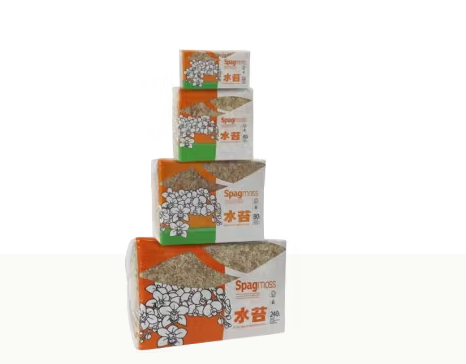
- Excellent moisture support
- Holds water well without becoming soggy
- Helps maintain humidity
- Mimics decayed plant layers
- Supports live plant roots
(works well in substrate mixes and above ground layers)
Tree Fern Panels & Fiber
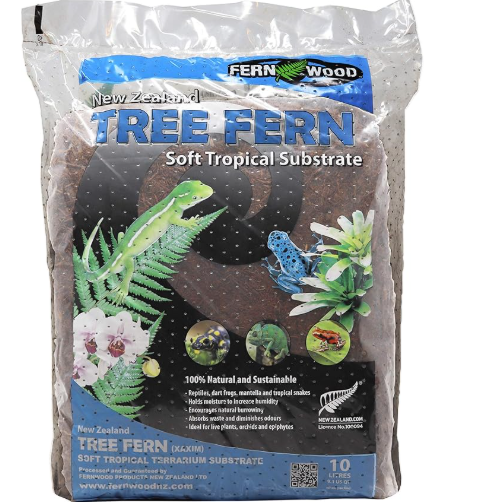
- Great for background walls
- Holds moisture with capillary action
- Mimics jungle wood
- Supports plant roots and climbing vines
- Soft enough for burrowing animals
These products help keep humidity, support plant growth, and reinforce a more natural ecosystem in your terrarium.
Choosing the Right Bioactive Terrarium Bugs
Good cleanup crews include:
- Springtails: eat mold and decaying matter
- Isopods: break down leaf litter and aerate soil
Together they keep your terrarium healthy and cleaner.
Monitoring & Maintenance
Once built:
- Check humidity daily
- Spot-clean excess waste
- Feed wildlife appropriately
- Add water when substrate dries
Bioactive doesn’t mean no maintenance. It means less deep cleaning and more natural balance.
Why Fungus Gnats Show Up (And Why It’s Normal)
Fungus gnats are attracted to the fungi that naturally colonize terrarium and vivarium substrates.
They can slip through standard window screens. So, they often get inside even in clean homes.
They are usually more annoying than dangerous. But high populations can become a problem.
A simple 3-part control plan
| Step | What to do | Notes that matter |
| Block entry | Use very fine fabric over vents (chiffon is one option mentioned) and keep lids sealed well. | A tight gasket-style seal helps more than loose lids. |
| Trap adults | Hang sticky fly ribbons or use sticky cards near the enclosures. | Avoid putting sticky surfaces where isopods can reach them. |
| Stop larvae | Use Bti (sold as “Mosquito Bits”) by soaking a few granules in water, then pouring some of that water into the substrate weekly. | The method described targets fly larvae and can reduce gnat numbers fast when repeated. |
The “Cleanup Crew” Angle Most People Miss
A strong springtail population helps keep fungi in check because springtails eat mold and other fungi.
Seeding springtails early helps because gnats are opportunistic. They can establish quickly if there is little competition.
Healthy, established isopod colonies can also reduce gnat breeding. They do so by rapidly consuming the same decaying materials gnats use.
Small Build Detail for Easier Maintenance
Some keepers experiment with skipping the mesh layer between drainage and soil in certain small builds. They do this to see whether it makes a real difference over time.
It can work as an experiment setup. But it is best treated as “test and observe,” not a universal rule.
Common Mistakes to Avoid
- Too much water — leads to root rot
- No drainage — causes soggy soil
- Wrong plants — stress animals
- No cleanup crew — waste accumulates
Follow the tips above and you will avoid most common problems.
Final Thoughts
Bioactive terrariums are amazing ecosystems. They reflect real habitats on a small scale.
With the right setup, they reduce maintenance, improve animal and plant health, and create a beautiful natural environment.
Whether you build one for a crested gecko, a snake, a frog, or just for fun, the rewards are the same: richness, life, and balance.
Build thoughtfully. Monitor often. And let nature do the work.